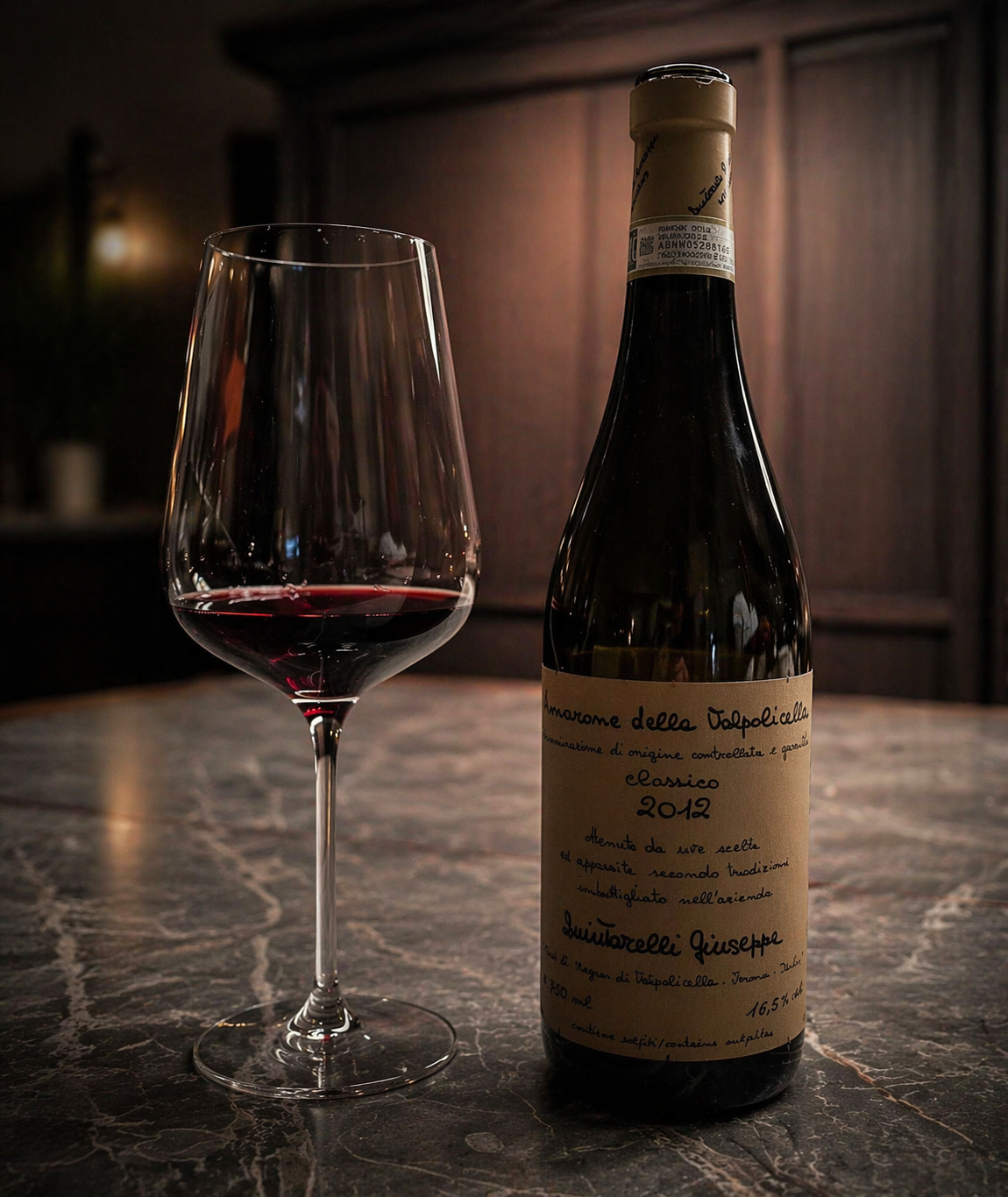
Quality gets talked about constantly in wine, but usually in lazy shorthand. People point to scores, prices, appellations, or famous names as if that settles it. It does not. A highly rated bottle can still arrive tired or flawed, while a modestly priced wine from an unknown grower can be exact, balanced, and completely on point.
When I think about quality control, I mean something much stricter than a score. It is a question that comes back with every wine we consider, and with every producer we already buy from.
Bottle to bottle consistency
A wine is not just a single bottle. It is a product that leaves a cellar in pallets, travels through distribution chains, sits in various conditions, and eventually arrives at a customer's table months or years after it was made. The question is not whether the wine was good when the winemaker tasted it before bottling. The question is whether it is the same wine when it is opened.
Bottle variation is real, and it erodes trust faster than almost any other quality problem. One bad experience can displace years of good ones. For this reason, we pay close attention to how consistent a wine is across different bottles from the same batch, across different batches from the same vintage, and across different vintages from the same producer. Inconsistency, even occasional inconsistency, is a signal we take seriously.
Balance, purity and freshness
Quality is not about concentration or power. Some of the most memorable wines I have tasted are light, spare, almost austere. What they share is precision: a sense that every element is exactly where it should be, that nothing is forced, that the wine is saying what it has to say without amplification.
Balance means the relationship between fruit, acidity, tannin and alcohol is in equilibrium. Purity means the wine tastes of its origin rather than of the interventions applied to it. Freshness means there is energy in the glass, a quality that keeps you returning for the next sip rather than setting it down. These are not abstract ideals. They are things you can taste in a wine, and things that are absent when a wine fails to meet them.
The full chain matters
A wine can leave its cellar in perfect condition and arrive at a customer degraded. Temperature is the most common culprit: excessive heat during transit, or repeated temperature fluctuations in storage, will age a wine faster than its maker intended and alter its character in ways that cannot be undone.
We are careful about where our wines travel from, how they are transported, and what conditions they pass through. We handle our own import logistics, with the same rigour we apply to sourcing. And we maintain our own cellar at consistent temperature rather than relying on general storage conditions. This part of the process is invisible to the customer, which is precisely why someone needs to be attending to it.
"We would rather carry forty wines with complete conviction than two hundred wines with hedged enthusiasm."
Producer discipline
The winemaker's decisions in the vineyard and the cellar define the ceiling of a wine's quality. Harvest timing, yields, how the cellar is managed during fermentation, how long the wine ages, when it is bottled: all of these require discipline, especially when external pressure (commercial, seasonal, financial) pushes toward shortcuts.
We pay attention to how producers respond to difficult vintages. A challenging year reveals whether farming is truly careful or only appears so in favourable conditions. Producers who maintain standards when conditions make it difficult to do so are the ones whose wines we can trust across years, not just in the good ones.
Supply chain integrity
The wine does not stop being someone's responsibility at the cellar door. Controlling our own import chain means there is no weak link between producer and bottle. We are accountable for the full journey, from cellar to your door.
Because we import directly, the responsibility for that chain sits entirely with us. We do not pass it off. Temperature-controlled transport, careful handling, and traceable logistics are not conditions we negotiate with a third party. They are standards we set and maintain ourselves.
Why we list fewer wines
We could list far more wines than we do. There are producers we admire whose bottles are still not on the site because we cannot yet source them consistently, or because the logistics are not tight enough yet, or simply because we want to taste more before we commit.
This is not a policy of exclusion for its own sake. It is the recognition that listing a wine is a form of endorsement, and that endorsement needs to be something we can stand behind completely. The customer who opens a bottle from our selection is trusting our judgement. That trust is worth more than a broader catalogue. It is, in fact, the only thing we are actually selling.
Kwaliteit wordt voortdurend besproken in de wijnwereld, maar zelden helder gedefinieerd. Het woord wordt verbonden aan scores, aan prijzen, aan appellaties, aan producenten met beroemde namen. Geen van deze zijn betrouwbare proxies. Een vijfennegentig-punten-wijn van een prestigieus domein kan geoxideerd aankomen, of totaal anders smaken dan wat werd beoordeeld. Een fles van dertig euro van een onbekende teler kan perfect consistent zijn, prachtig uitgebalanceerd en precies wat de producent beoogde.
Als ik nadenk over kwaliteitscontrole, denk ik aan iets specifieker en veeleisender dan beoordelingssystemen toelaten. Het is een vraag waar ik steeds op terugkeer bij elke wijn die wij overwegen toe te voegen aan ons assortiment, en bij elke producent met wie wij al samenwerken.
Fles-voor-fles consistentie
Een wijn is niet slechts één fles. Het is een product dat een kelder verlaat in pallets, door distributieketens reist, in uiteenlopende omstandigheden staat, en uiteindelijk maanden of jaren na het maken op de tafel van een klant aankomt. De vraag is niet of de wijn goed was toen de wijnmaker hem proefde voor het bottelen. De vraag is of het dezelfde wijn is als hij wordt geopend.
Flessenvariaties zijn reëel, en ze ondermijnen vertrouwen sneller dan bijna elk ander kwaliteitsprobleem. Één slechte ervaring kan jaren van goede verdringen. Om deze reden letten wij nauwlettend op hoe consistent een wijn is over verschillende flessen uit dezelfde batch, over verschillende batches uit hetzelfde jaargang, en over verschillende jaargangen van dezelfde producent. Inconsistentie, zelfs incidentele inconsistentie, is een signaal dat wij serieus nemen.
Balans, zuiverheid en frisheid
Kwaliteit gaat niet over concentratie of kracht. Sommige van de meest memorabele wijnen die ik heb geproefd zijn licht, sober, bijna strak. Wat zij gemeen hebben is precisie: een gevoel dat elk element precies op zijn plaats staat, dat niets geforceerd is, dat de wijn zegt wat hij heeft te zeggen zonder versterking.
Balans betekent dat de verhouding tussen fruit, zuurgraad, tannine en alcohol in evenwicht is. Zuiverheid betekent dat de wijn smaakt naar zijn oorsprong en niet naar de interventies die erop zijn toegepast. Frisheid betekent dat er energie in het glas zit, een kwaliteit die je vanzelf naar de volgende slok laat grijpen in plaats van het glas weg te zetten. Dit zijn geen abstracte idealen. Het zijn dingen die je kunt proeven in een wijn, en dingen die ontbreken wanneer een wijn er niet aan voldoet.
De volledige keten telt
Een wijn kan zijn kelder in perfecte staat verlaten en bij een klant gedegradeerd aankomen. Temperatuur is de meest voorkomende boosdoener: overmatige hitte tijdens transport, of herhaalde temperatuurschommelingen in de opslag, zullen een wijn sneller laten rijpen dan de maker beoogde en zijn karakter op manieren veranderen die niet ongedaan kunnen worden gemaakt.
Wij zijn zorgvuldig over waar onze wijnen vandaan komen, hoe ze worden getransporteerd, en welke omstandigheden ze doorlopen. Wij beheren onze eigen importlogistiek, met dezelfde strengheid die wij toepassen op inkopen. En wij onderhouden onze eigen kelder op consistente temperatuur in plaats van te vertrouwen op algemene opslagcondities. Dit deel van het proces is onzichtbaar voor de klant, wat precies de reden is waarom iemand er aandacht aan moet besteden.
"Wij dragen liever veertig wijnen met volledige overtuiging dan tweehonderd wijnen met aarzelend enthousiasme."
Discipline van de producent
De beslissingen van de wijnmaker in de wijngaard en de kelder bepalen het plafond van de kwaliteit van een wijn. Oogsttijdstip, opbrengsten, hoe de kelder wordt beheerd tijdens de gisting, hoe lang de wijn rijpt, wanneer hij wordt gebotteld: dit alles vereist discipline, met name wanneer externe druk (commercieel, seizoensgebonden, financieel) richting shortcuts duwt.
Wij letten op hoe producenten reageren op moeilijke jaargangen. Een uitdagend jaar onthult of de landbouw werkelijk zorgvuldig is of alleen zo lijkt onder gunstige omstandigheden. Producenten die standaarden handhaven wanneer omstandigheden het moeilijk maken dat te doen, zijn degenen wier wijnen wij door de jaren heen kunnen vertrouwen, niet alleen in de goede.
Integriteit van de toeleveringsketen
De wijn houdt niet op iemands verantwoordelijkheid te zijn bij de kelderdeur. Het controleren van onze eigen importketen betekent dat er geen zwakke schakel is tussen producent en fles. Wij zijn verantwoordelijk voor de volledige reis, van kelder tot je deur.
Omdat wij rechtstreeks importeren, ligt de verantwoordelijkheid voor die keten volledig bij ons. Wij dragen het niet af. Temperatuurgecontroleerd transport, zorgvuldige behandeling en traceerbare logistiek zijn geen voorwaarden die wij met een derde partij uitonderhandelen. Het zijn standaarden die wij zelf stellen en handhaven.
Waarom wij minder wijnen opnemen
Wij zouden twee keer zo veel wijnen kunnen opnemen als wij doen. Er zijn producenten die wij bewonderen wier wijnen wij nog niet hebben toegevoegd omdat wij er nog niet zeker van zijn dat wij ze consistent kunnen verkrijgen, of omdat wij de logistiek die nodig is om de toeleveringsketen correct te beheersen nog niet op orde hebben, of omdat wij slechts twee jaargangen hebben geproefd en meer willen zien voordat wij ons vastleggen.
Dit is geen uitsluitingsbeleid op zichzelf. Het is de erkenning dat het opnemen van een wijn een vorm van aanbeveling is, en dat die aanbeveling iets moet zijn waar wij volledig achter kunnen staan. De klant die een fles uit onze selectie opent, vertrouwt op ons oordeel. Dat vertrouwen is meer waard dan een breder assortiment. Het is, in feite, het enige wat wij werkelijk verkopen.